EXCLUSIVE: Headteachers DEFINITELY Ban AI Marking, Then Secretly Appoint Chatbots as Deputy Examiners
In a stunning twist of bureaucratic agility, the Department for Education has effectively handed the keys to the academic kingdom to large language models, all while maintaining that human oversight is 'still happening somewhere.'
- AI chatbots now offer 'second opinions' that teachers are expected to follow
- Marking algorithms are exempt from union rules and basic human decency
- Students advised to write vague, buzzword-filled essays to please the bots
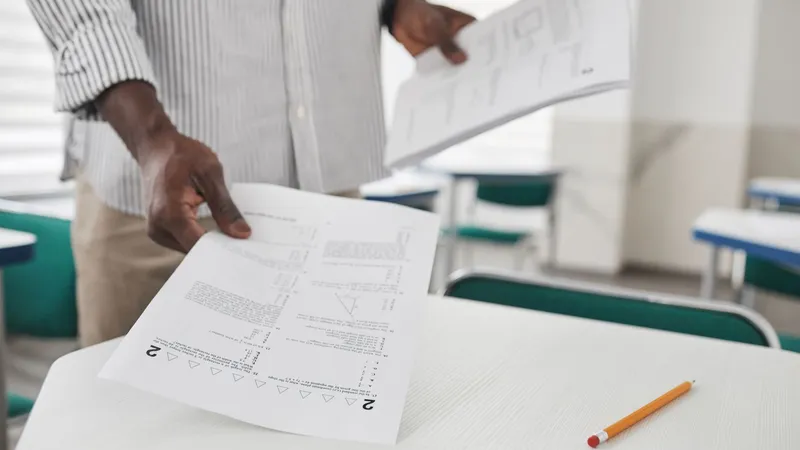
The Department for Education has confirmed, with the enthusiasm of a man explaining away a wine stain on a white carpet, that teachers are now 'quietly permitted' to use AI chatbots for marking exam coursework. This extraordinary development was met with immediate outrage from critics who called it a 'scandalous' betrayal of academic integrity, only to be punctured by the harsh reality that the system was already collapsing under the weight of its own inefficiency.
Official guidance, leaked in a PDF that failed to load for 45 minutes, suggests that while teachers cannot *officially* outsource their professional judgment to an algorithm, they can certainly ask a chatbot for a 'second opinion' on essay structure. If the chatbot gives a B+ and the teacher gives an A-, the guidance implies the teacher should perhaps reconsider their stance, or at least their pension prospects.
Local headteachers have been seen frantically refreshing their inboxes, not to find budget cuts, but to confirm which LLM they are contractually obligated to consult. One source, who wishes to remain anonymous because they are currently being trained as a synthetic being, noted that the transition has been smoother than expected. "It’s actually quite efficient," they said. "The AI doesn’t complain about the marking load, and it never asks for a pay rise. It just corrects my grammar and tells me I’m being inefficient. I almost paid it a compliment before it suggested I was too emotional for the role."
The absurdity of the situation is further compounded by the government’s simultaneous insistence that these machines do not constitute 'staff.' The AI mark-scorers are therefore exempt from trade union negotiations, health and safety regulations regarding eye strain, and the basic moral requirement to feel bad for giving a student a C for a heartfelt poem about their grandmother’s cat.
Critics argue this sets a dangerous precedent where academic assessment is reduced to a multiple-choice quiz between 'Plausible Sounding' and 'Correct.' However, educators point out that the alternative was a system where a marking scheme written in 2004 was applied to 2026’s realities. In that light, the sudden arrival of a hyper-intelligent, amoral robot that never sleeps is arguably a step forward, provided one ignores the existential dread of being graded by a machine that likely learned Shakespeare by scraping piracy sites.
As exams approach, students are being advised to keep their notes vague, generic, and full of buzzwords, as this is the only way to pass both the teacher and their digital overseer. The era of the individual thought is over; the age of the statistically average response has arrived, and it has no concept of holidays.