EXCLUSIVE: Your 'British' Sea Salt Is Actually German Rock, Disguised As A Mineral Enrichment Agent
In a shocking admission of industrial espionage, it turns out the crunch between your lips is not from the Jurassic coast, but from a quarry in Bavaria.
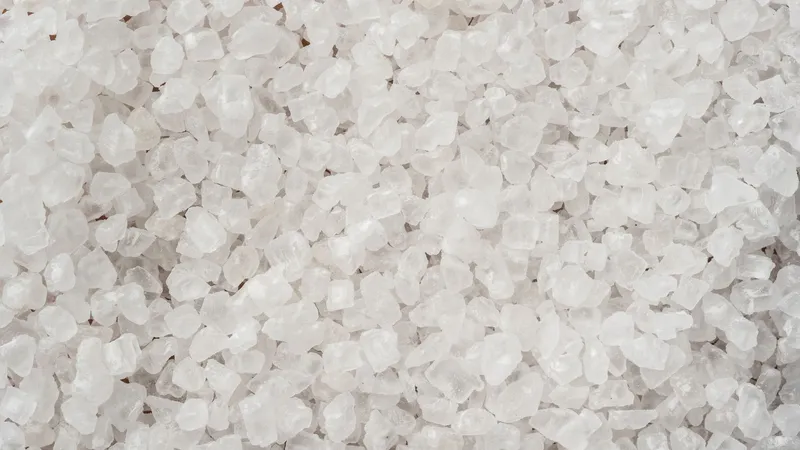
- German rock salt masquerades as British sea harvest
- 'Enrichment' involves dumping quarry dust into the ocean
- Middle-class culinary identity collapses under geological scrutiny
For decades, the British middle class has been told a comforting lie: that the crystal of choice for their roast potatoes and grilled fish was scooped from the cold, majestic waters of Cornwall or the Yorkshire coast. It was a badge of heritage. A taste of the tides. Or so the marketing brochures, featuring misty beaches and heritage fonts, would have you believe.
But a routine investigation has peeled back the crust of this national myth. It turns out that what you are diligently sprinkling over your Sunday dinner is not sea salt at all. It is rock salt. Specifically, it is rock salt mined from deep underground in Germany. Not bathed in ocean spray, not harvested by sun-weathered fishermen, but extracted by industrial drills from the Bavarian bedrock.
When confronted with this geological betrayal, the firm did not apologise. Instead, they offered a explanation so smooth it could only be lubricated by legal counsel. They claim the German rock is used as a 'filtration agent' and to 'enrich the seawater' with minerals. Let that sink in. They are taking rocks from Germany, dumping them into British seas, and then scooping the salt back out so they can tell us it is 'naturally enriched.' This is akin to buying a cup of tea, stirring in a spoonful of dirt, and serving it as 'artisanal loam-infused brew.'
The absurdity reaches peak surrealism in the terminology. 'Enriching' seawater with rock salt is not a process; it is a contradiction of terms. Seawater is already rich in salt. It is the definition of the medium. By adding imported rock, the company has effectively invented a new category of cuisine: 'Geological tourism on a plate.' You are no longer eating salt; you are consuming a compressed souvenir from a German mining operation, dressed up in a tweed jacket and a bowtie.
Critics have described the move as 'the ultimate in lazy culinary branding.' A source close to the industry, who asked to remain anonymous because he is currently eating the product, noted, 'It’s not about the origin, it’s about the narrative. If you say it’s German, they want 50p. If you say it’s filtered through German rocks by magic, they want £1.50.'
So next time you sprinkle that 'British' salt on your steak, pause. Look at the crystal. Know that it is not a grain of the coastline. It is a piece of the continent, smuggled into your pantry via a trick of marketing language. The only thing being enriched is your bill. The only thing being filtered is the truth.
Your crust is lying to you. It always has been. And now, you know it’s from Bavaria.